
Uintah County Projected Release Dates
A projected date is a future plan or calculation. An actual release date records the completed exit or transfer. They are not interchangeable. A Board order can grant a future parole date, yet institutional conduct, a new case, a rescission action, or another hold may prevent release on that day. The executed UDC movement record shows what occurred.
For the Uintah County Jail, a judge may authorize release before staff complete processing. Another warrant or detainer can keep the person in custody. A detainer is a request by another authority to hold or transfer someone. The court docket explains the legal order, while the jail’s custody-event record supplies the actual time and destination.
Pretrial detainees often lack any fixed exit date. Bond may be posted, charges may change, and a court may act, but jail processing and outside holds still matter. A sentenced person has a judgment to start from, though even that does not support a do-it-yourself date unless the responsible agency confirms the calculation.
Find Uintah County Projected Release Dates
Start with the custody type. Uintah County Jail handles local pretrial and county-sentence custody. UDC handles Utah prison sentences and community supervision. The Board controls parole decisions for eligible state prisoners. BOP supplies its own projected date for federal sentenced custody. One system’s date cannot be treated as another authority’s release.
The UDC Offender Search is useful for people currently under UDC supervision. However, UDC’s public search does not document a projected or tentative release-date field. It also does not promise a historical discharge date, sentence worksheet, release reason, or completed episode. Do not claim that the public result will show those items.
- Classify the case as county jail, Utah state prison, federal sentenced custody, federal pretrial custody, or immigration custody.
- For a county detainee, read the court judgment or release order, then call Uintah County Jail and request its actual calculation or release event.
- For a state prisoner, check UDC current supervision, then search the Board’s decisions for an order that sets parole, rehearing, expiration, or another action.
- Distinguish a scheduled hearing from a written decision. The hearing date alone is not an exit date.
- Ask UDC for the parole, termination, or expiration date from its staff-shareable records when the public pages do not answer the question.
- After the planned date, verify the actual movement through UDC, the holding facility, and VINE.
The county release-record process and custody decision tree are available on the Uintah County released-inmate lookup. That route is the better fit when the person never entered state prison.
Note: A UDC no-match may reflect full discharge, county-only custody, another system, or an identity issue; it is not proof of release.
Uintah County Board Release Decisions
Utah uses indeterminate felony sentencing. A judge imposes a statutory range, and the Utah Board of Pardons and Parole decides parole timing within its authority. Guidelines and matrices inform the review but do not create an automatic release day. The Board may set a parole date below a guideline or hold a person to the lawful maximum.
Use the combined Board search to find a scheduled hearing or recent decision. Those are different records. An original hearing reviews a person whose sentence permits parole. A rehearing returns to the case later. The Board may also conduct violation, evidentiary, redetermination, rescission, paper-review, or special-attention proceedings.
The Board says no decision is made at the hearing itself. A written order may take two to six weeks and can set parole, rehearing, expiration, termination, reinstatement, rescission, or another outcome. Read its precise words. If it grants a future parole date, preserve the order but confirm implementation after that date.
The official Board process source shown below explains why the hearing and the later decision must not be merged.
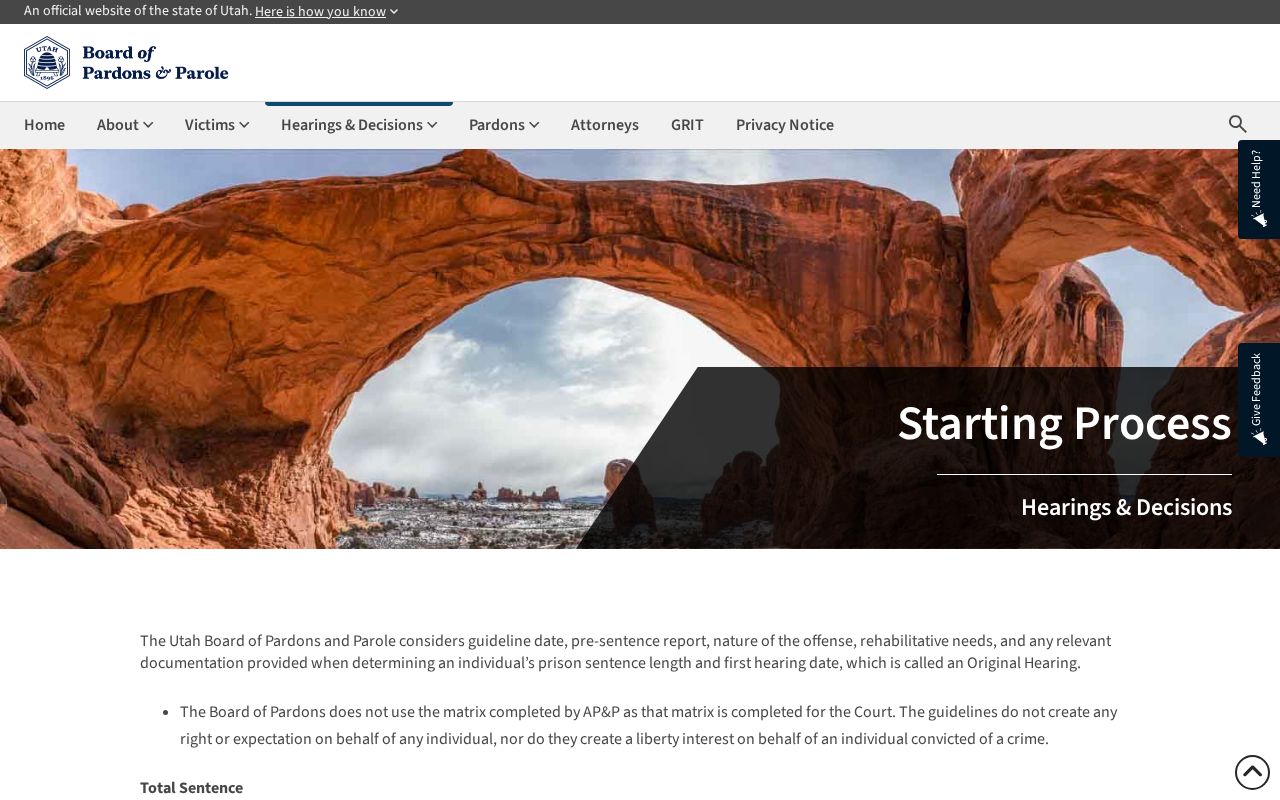
The image supports the Board channel, while UDC movement and status records remain the source for the completed release.
Uintah County Release-Date Records
When the Board and public search do not supply a clear date, request the existing agency record. For UDC, identify the person by UDC number and court case when possible. Ask separately for the admission or commitment date, movement tied to release, actual parole or release date, release-authority or order identifier, legal status immediately after release, and termination or expiration date.
The distinction between prison release and sentence termination should be explicit. A person can leave prison on parole and remain under UDC supervision for years afterward. The parole date marks the prison exit into supervision. The termination or expiration date marks the later end of UDC authority. A request that says only “release date” may return the wrong one.
UDC’s public-information guidance says a case manager may share several identity, legal-status, housing, sentence, Board hearing, parole, termination, expiration, commitment-court, and case fields. That is a staff information channel, not a promise that those fields appear in the public offender search. Use the UDC GRAMA and public-information route for a durable record when needed.
If a request is denied, the response should identify the withheld part, cite the basis, and explain the appeal route. If UDC does not hold the record, the response may point to the Board, court, or facility. Preserve that answer because it helps trace which authority owns the date.
Uintah County Earned-Time Release Credit
Utah does not have a verified blanket rule that everyone in this context serves 85 percent. Federal good-conduct rules also should not be imported into a Utah state sentence. Instead, Utah Code section 77-27-5.4 and UDC’s earned-time program describe specific adjustments tied to approved work and Board action.
Successful completion of up to two approved case-action-plan programs can require four months of credit for each, with a maximum of eight months. Only the first vocational completion counts for mandatory credit. Later achievements may be sent to the Board for discretionary review. Exemplary performance and other approved achievements can move through special attention.
Credit is not automatic in every case. A person serving life without parole or ordered to expire a life sentence is ineligible. The Board may forfeit credit after a major disciplinary infraction, a new charge, or a rescission setting. It may award only the reduction that leaves enough transition time. If no release date exists because the original hearing has not occurred or a rehearing controls, completion is noted for later review rather than converted into a fixed day.
The UDC earned-time page shown below is the official program channel.
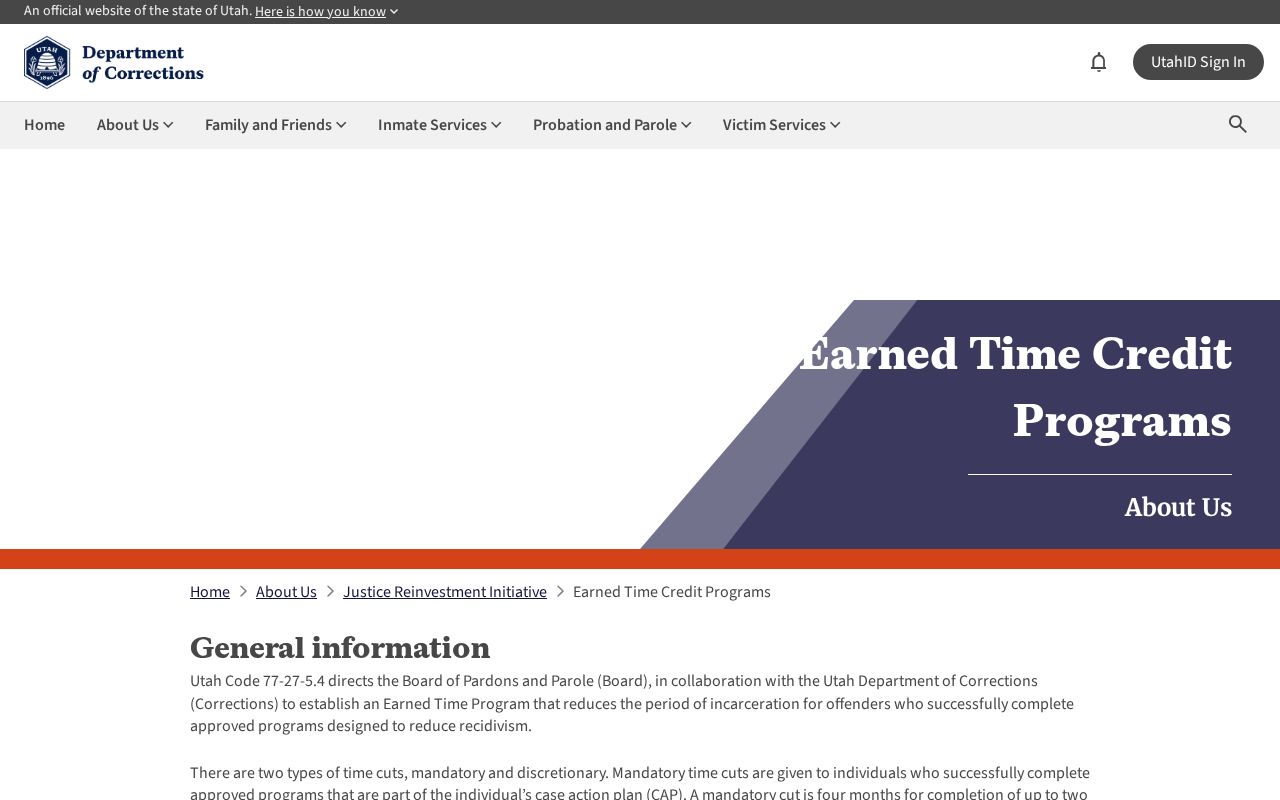
Use the resulting Board action and UDC record, not a general online calculator, to understand an individual date.
Uintah County Jail Release Calculations
County jail sentences follow a different channel. Utah Code section 76-3-204 gives definite maximum terms: up to 364 days for a class A misdemeanor, six months for class B, and 90 days for class C. Those ceilings are not an individual release calculation.
The judgment, credit for time served, holds, and the jail’s calculation determine the expected date. Credit for time served means qualifying time already spent in custody that the court or jail applies to the sentence. The research found no statewide automatic Uintah County Jail percentage deduction. It also found no documented local weekend or holiday early-release rule.
If an expected date falls near a weekend or holiday, do not assume release will move to Friday. Contact the sentencing court for the judgment and the jail for the operational calculation. After the day passes, request the actual release or transfer event, including destination if another authority assumed custody.
Uintah County Jail641 E 300 S
Vernal, UT 84078
435-781-1300
Why Uintah County Release Dates Change
A date can move for legal, custodial, or program reasons. The event should be tied to its source. A court modifies a judgment. The Board changes parole action. UDC records institutional conduct and movements. A jail resolves local holds. Treating them as one shared calendar hides the reason for the change.
| Factor | Possible effect | Record to check |
|---|---|---|
| Earned-time award | May move eligible Board action earlier | Board order and UDC earned-time record |
| Discipline or new charge | Credit may be lost or a granted date rescinded | UDC record and Board rescission decision |
| Detainer or warrant | Release from one case may become transfer or continued custody | Facility destination record and requesting authority |
| Court order | Sentence, credit, or release authority may change | Court docket and signed order |
| Parole decision | May grant a date, set rehearing, deny release, or terminate | Written Board decision |
| Identity or data correction | May fix a record without changing the real event | Agency correction response |
Rescission is especially important. It is a Board process that can withdraw an already granted parole date before the person exits. The Board hearing-types source shown below identifies that process.
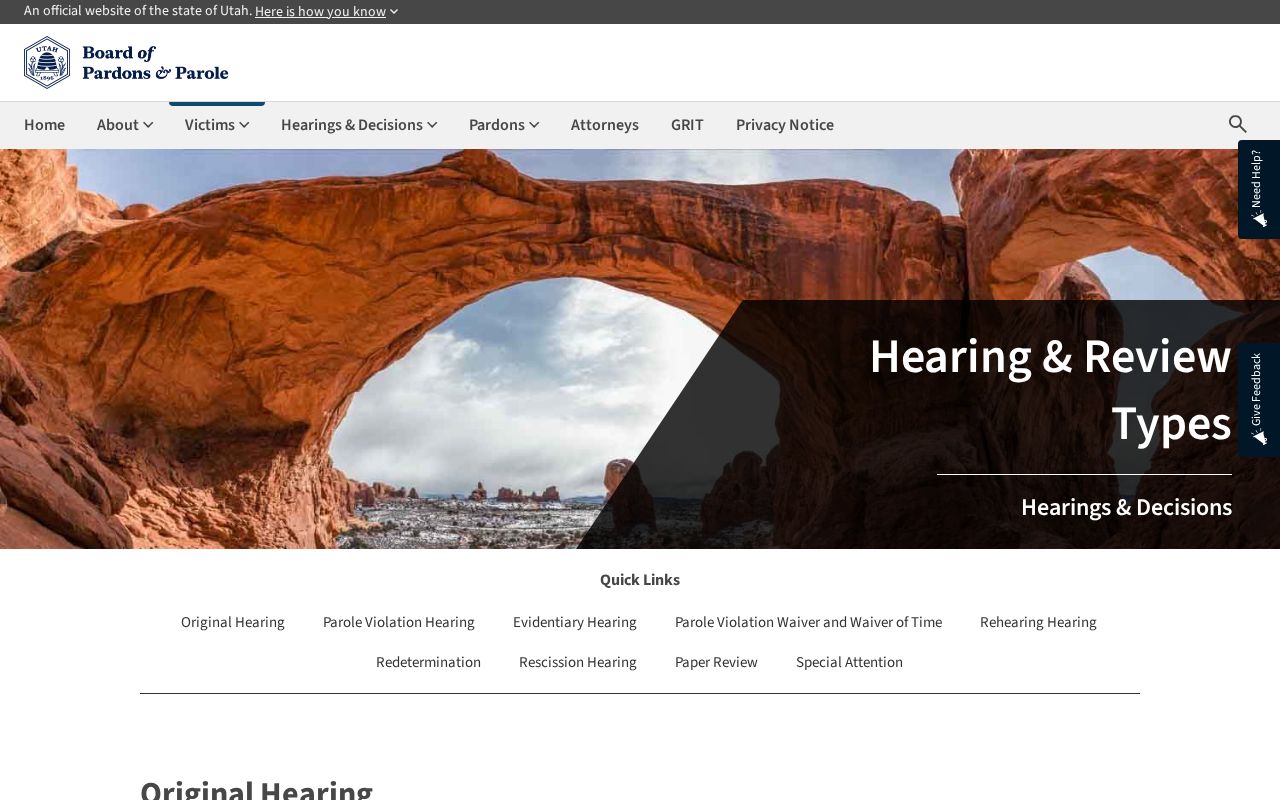
A future date remains prospective until the facility records the actual release or transfer.
Confirm Uintah County Release Dates
For a state prisoner, combine the Board order with UDC movement or legal-status records. A parole status after the planned day supports release into community supervision, not full discharge. Request the exact release date when timing matters. A later termination or expiration is a separate event.
VINE can add a timely notice for release, transfer, escape, or death. UDC also lists a 30-day advance parole-date notice and moves between prison sites, county jails, and community correctional centers. A transfer alert must not be called a community release. The VINE Inmate Check explains the one-person alert process.
For a county detainee, pair the court order with the Uintah County Jail release event. For federal sentenced custody, use the BOP locator’s projected or past release date and its records explanation. Federal pretrial, ICE, and USMS cases need their own authority-specific records.
Final check: Confirm the actual date, event type, and destination with the agency that held the person.
Note: A release from one authority may be a transfer to another, so destination is part of the date verification.